
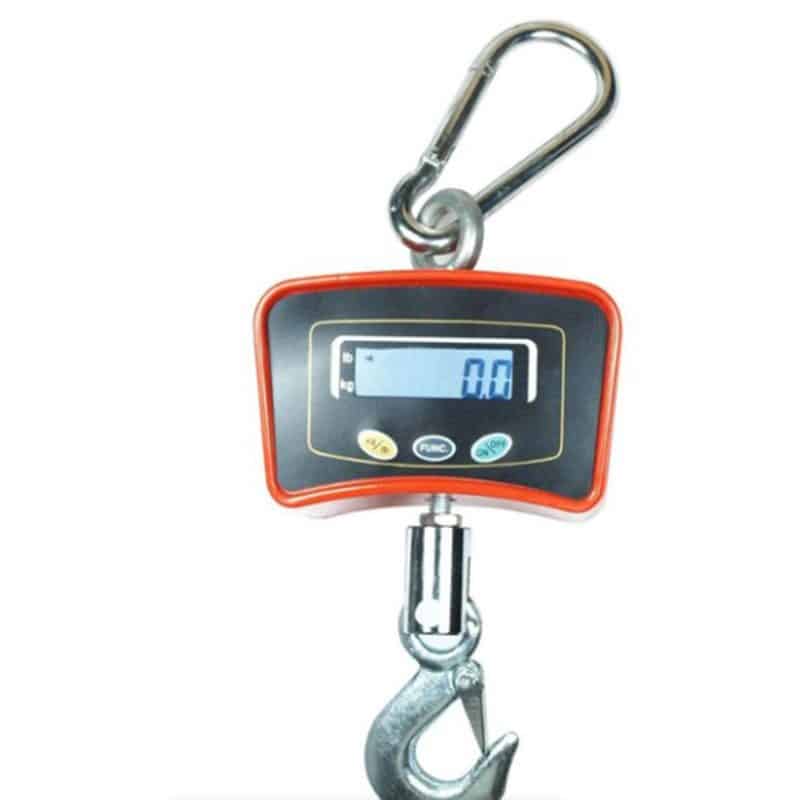
Description
Key Features
- Weight Capacity: Maximum capacity of 500 kg (approximately 1100 lbs).
- Accuracy: High-precision sensors (load cells) provide reliable and accurate measurements, often with an accuracy of 0.1kg to 0.2kg.
- Display: Features a clear, easy-to-read digital LCD or LED display, often backlit for visibility in low-light conditions.
- Construction: Built with a durable, heavy-duty housing, typically made of aluminum-casting or die-cast metal, and equipped with a strong rotating steel hook and shackle with a safety catch.
- Portability: Despite their robust build, these scales are often compact and portable, designed for easy transport and use in various locations.
- Power Source: Most models are battery-operated, often using a rechargeable battery, allowing for use without a constant power outlet.
- Functions: Common features include:
- Tare function: Allows the user to subtract the weight of a container or lifting equipment.
- Unit conversion: Easy switching between units like kilograms (kg), pounds (lbs), and sometimes Newtons (N).
- Data hold: Locks the readout when the data is stable.
- Remote control: Many industrial models include a remote control for safe operation from a distance.
- Overload protection: Safety features to prevent damage if the maximum capacity is exceeded.
Applications
These scales are highly versatile and used across numerous industries:
- Agriculture: Weighing livestock, animal feed, or crops on farms.
- Meat Processing: Essential for use in butcheries and abattoirs to weigh carcasses and large meat cuts.
- Industrial: Measuring heavy machinery, building materials (like steel beams), and equipment in warehouses, factories, and construction sites.
- Commercial: Used in markets or shipping yards for weighing large batches of goods.
- Recreational: Popular among hunters for weighing large game carcasses.
